ABOUT WONDERBOY
I wrote Wonderboy when I was twenty-one, still only separated by a decade from the age of my main characters, Jack and Mel. Over the years, I toyed with the presentation of the older characters as I entered their age range.
I was influenced by Edith Wharton’s “Ethan Frome”, Katherine Mansfield’s short stories, and of course Katherine Paterson’s “Bridge to Terabithia”.
Wonderboy
The Adelaide Hills, Australia, 1975
Chapter 1
Jack Bennett was running late. His mother, Jean, had already called three times to say his older brother Simon was ready to leave for school. He looked round his room once more—there was always some schoolbook he was reprimanded for forgetting to pack. Jean called a final time, judging from her tone. He hoisted his old-fashioned, leather bag over his shoulder; all his classmates had vinyl.
‘Your toast,’ she said, when he emerged from his room.
Jean was tall and willowy, with a beautiful aquiline nose and slightly wavy ebony hair. Everyone said Simon took after her. She was wearing one of the red cardies she’d knitted herself.
Jack spread his toast generously with Vegemite and hurried outside, getting doused with sunlight; it would be a hot day. He hated hot days, which seemed to be the norm where they lived. Everyone else wore shorts in such weather but he felt silly exposing his knees. He looked at his covered legs. Was it too late to change his woollen trousers for the norm? Jean’s expression as she appeared at the front door decided him to keep moving.
Shoving his toast in his mouth, he grabbed his green, rickety bike from under the iron veranda. He could see Simon was already a long way up their dolomite drive, about to disappear at the point where the road was arched by three River Red gums with impressively long reaches.
His father, Daniel, was filling his Holden station wagon with the paint tins he needed for work. Daniel also had dark hair that made Jack’s blondeness even more surprising. (Although Jean told Jack his was the sort of blonde that would be brown by the time he was twenty.) Daniel was wearing his paint-smattered overalls. His eyes were blue like Jack’s, but a washed-out version.
‘See you, son.’
Jack took the half-eaten toast, with its Moorish arch, out of his mouth.
‘Bye, Dad.’
Daniel tousled Jack’s hair and watched as his son pedalled in pursuit of Simon.
Passing under the tunnel of gum leaves, Jack emerged into the glare again, spying Simon nearly at the top of the hill. He was still riding sitting down, whereas Jack had to stand for strength to get up the steep slope.
Simon was also dark-haired. At fourteen, he wasn’t thin and gangly like Jack, but already filled-out for a kid. The muscles he was building playing football would soon iron out any familial lankiness even more.
The road levelled out and Jack could sit down to ride like his brother. But still he’d never catch up to him! A friendly toot came from behind; his father in his dark tan station wagon. Daniel leant out the window.
‘Catch a ride.’
Still pedalling, Jack held onto the open back window. He smiled as they passed Simon, who yelled out, ‘Cheat!’
Arriving at the pipe gate with its diagonal bar going down to the bottom hinge, Jack let go and careened to a halt. He threw his bike down on the long grass. Slipping the wire off the iron knob on the striated post, he opened the gate for his father. Uncharacteristically, Daniel neither thanked him nor waved goodbye as he drove through; his eyes were focused elsewhere.
Jack also looked across at the next-door neighbour’s fence. To his surprise, two labourers (Kim Mitchell’s sons, friends of Jean) were removing the boards barring the gate. As far back as Jack could remember, the next-door neighbour’s property on that side had been vacant, house and land.
Daniel drove off slowly on the bitumen road, still focused on the property. Jack turned back to the two lads who were levering off the last board.
It was odd all right, after all these years, that it should be unsealed now. In all his eleven years, Jack had never known the place to be tenanted.
Daniel let his sheep roam there now and then to keep down the grass and minimise the threat of fire. Once Jack had asked him why the owners (wherever they were) didn’t sell. He’d answered in an odd, dreamy way: ‘Perhaps she can’t bear to.’ Just who ‘she’ was, Daniel didn’t say.
Jean forbade Jack and Simon from hopping over the fence, except for when they were helping Daniel round up sheep.
The brothers used to muck about there, regardless. The large old house had been boarded up as well, but they could explore a series of ruined settlements dating from Australia’s colonial past situated to the back of the property. There were old, gnarled orchards and an amazing overgrown garden hidden inside one of the roofless stone buildings. In this garden, they were doubly forbidden to play, again on Jean’s command. The reason given: the crumbling walls of the settlers’ huts were old and could collapse any moment.
They looked sturdy enough to Jack.
He loved the sequestered secretiveness of the place. Unfortunately, in recent years, Simon had lost what little interest he’d ever had in it. Now Jack, if he trespassed at all, was obliged to do so alone. He never tarried, though. Before long, some sound, some shadow, either in the orchard, under the veranda, or by the horse stalls, would spook him and he’d run back home. The secret garden compelled and frightened him most. It was shadowy, yes, but the most worrisome part was its deep… sadness. Did people get to feel this sad?
‘Beat you!’
Jack could kick himself. All that daydreaming meant Simon had ridden past him on his super-slick red bike and sped through the open gate.
‘Hey, wait!’ yelled Jack.
He pushed his bike through, hurriedly threw it against the other side of the wood post, and shut the gate, looping the iron noose over the bent railway bolt. He ran alongside his bike before stepping up on the pedal and throwing his other leg over. But still he hadn’t been quick enough; Simon had already forged a strong lead.
As Jack legs pistoned, his mind wandered again.
If only Simon still liked to play make-believe, just as he had before the encroaching teenage years stole his thoughts elsewhere. Sometimes Daniel would play with Jack after work, but he was often tired and Jean would have chores lined up for him.
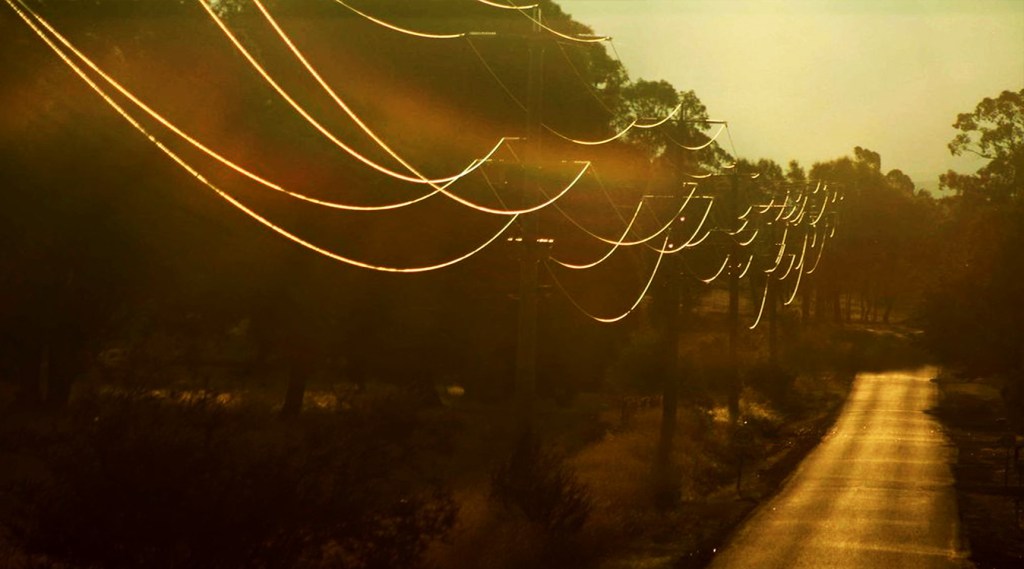
The two pedalled along, the distance ever growing between them. The road stretched over the hills like a sunning snake. Great, rolling brown hills fell away either side. Trees huddled in clumps, sheep in aggregates, and cows were spread out, munching, while telegraph wires casually bisected the land in sagging lines, their wires argent in the morning sun.
A brrrm of an engine and Jack glanced to his right to see a red-and-white striped Cessna plane flying low over the Harrow property. It banked sharply to the left, releasing its spray. Immediately, Jack’s mind improved on the situation. To him, the sky was now dark with clouds. The Cessna swung round ahead of them and disappeared into the storm’s thick, black centre.
He yelled to Simon, ‘Hey, stop!’
The plane re-emerged. But no longer was it a Cessna: in Jack’s eyes, it was now a World War II spitfire, khaki green, with mad red eyes painted under its wings.
Simon braked and stood astride his bike, craning his neck to stare back at Jack. The Spitfire dropped out of the sky and soared down the road at them.
‘Oh, no,’ thought Jack, as the plane opened fire with its twin machine guns, the sides of the road popping up with dirt either side of Simon.
Jack yelled a warning but Simon merely stared back, refusing to understand. Jack dived into the side ditch, which was suddenly a trench in a combat zone, ringed with barbwire. Jack, armed with a Sten gun, fired at the belly of the spitfire as it flew overhead.
With its passing, the sky cleared. Simon was looking down at Jack, his square shoulders framed in cerulean blue. Sheepishly, Jack put down the stick he was holding. Simon merely shook his head.
As Jack dusted himself off and righted his bike, that overgrown garden came back to mind. For the first time, it worried him that no one tended it. He wondered for whom the labourers were removing the boards.
And just who was this ‘she’ his father had mentioned so dreamily?
Jack didn’t even try to keep up with Simon for the rest of the ride to school and nor did Simon slow his pace.
Chaining his bike next to Simon’s at the school gate, Jack headed into the grounds, where he could see a futuristic-looking beetle-green Citroën DS parked outside Mr Higgins’ office. Higgins was the headmaster, and generally considered benign by the other kids, but Jack avoided him where possible all the same. Just then, Higgins walked out of his office in his perennially grey gabardine trousers and overcoat. Beside him, was a lady in a long flowing maxi dress, pulled in at the waist with a yellow belt. She wore an antique, floppy hat adorned with fresh gardenia, but this could not hide her abundant blonde hair, streaked with fawn. Her face was beautiful, her expression, kind. At her side was a tomboyish-looking girl, about Jack’s age, in a collared green shirt, rather brave flared trousers and brown boots.
Higgins awkwardly opened the driver’s door for the lady, while the girl hopped in the passenger side.
Higgins had the largest forehead Jack had ever seen. It somehow contrived to give him a constantly startled appearance and today was no different. He noticed Jack, meaningfully tapped his similarly oversized watch, and nodded towards class.
As Jack trundled off, he had the unreal sense that he’d never before seen such an elegantly attired and poised creature to grace Miller’s Creek. That lady seemed better suited to TV or even the movies.
Miss Jackson was about the same age as Higgins: mid-fifties. But to Jack, she was simply an adult of the more archaic variety. She had jet-black hair, impossibly straight, that sat atop her head like a lacquered helmet, enlivened by the odd strand of grey. Her nose was beaklike and she always wore dark skivvies, tartan grey dresses, black stockings and black shoes with brass buckles—everyone wondered where she bought them, they were so out of style! She had a funny way of standing, as though her elbows were attached to her body, forcing her to lean back to see and co-ordinate whatever her hands were doing.
Just then, she was awkwardly copying notes from her red book onto the blackboard, which meant a lot of bird-like peeping up and down.
‘… and then came the Jurassic Period, and that’s when the biggest reptiles roamed the earth. What we call the dinosaurs.’
Jack surveyed his class, heads tilting from the blackboard to their books, studiously copying. The two-seat wooden desks (still with their inkwells despite the Bic pen having been introduced to schools ten years previously) were divided in two columns, with room to walk down the middle. Miss Jackson insisted the girls sat on one side, the boys on the other. Jack was thankful Miss Jackson made the girls sit in the windowless part that joined the corridor wall, to ‘look after their skin’, because he liked to stare through the glass.
There was nothing outside the window except, parallel to theirs, another portable classroom jacked-up on Besser bricks, containing another odd teacher and another bored bunch of students copying boring notes.
‘… and after the Jurassic Period, came the Cretaceous…’ droned Miss Jackson.
Jack loved dinosaurs. His father had bought him many a Methuen book on those ancient reptiles (or had people decided they were birds now?) but somehow Miss Jackson had the knack of making even exciting things dull.
Michael snorted in the seat next to him. Michael had curly brown hair and his nose was always grotty, like he was still in prep. It left him with a perpetual hint of a Hitler moustache. He and Jack had next to nothing in common, except they each had no one else with whom to share a desk.
The bell rang. Jack turned from the window to Miss Jackson. She frowned before carefully marking her spot in her red book with its bound green ribbon. She scrutinised the class and frowned again.
‘All right, off to lunch.’
The students began to move in a single great clattering commotion. Miss Jackson’s face tensed like she’d been electrocuted.
‘Class!’
Obediently, they resumed their seats. Miss Jackson allowed herself a tight smile.
‘Girls first.’
The girls got up quietly and filed out, some of them beaming at the boys. Jack stared out the window again, wondering if this was how things were meant to be. He heard Miss Jackson signal that the boys could leave next. As they got up noisily around him, Jack wondered if he’d be less alone in that garden. Could he and it be alone together somehow?
When the noise had moved to the corridor, he stood, only to lock eyes with Miss Jackson. She had a flat silver flask to her lips, which she quickly lowered. Somehow he knew that, like him, she had thought the class empty. With a bitter grin, she tightened the lid on the flask and put it in the drawer, which she then locked with an iron key.
The smell as Jack passed was strong and sweet and acrid.
His lunch was what his mum always made him. Contained in a plastic red lunchbox, that had three jutting partitions, it held a frozen orange juice container (usually melted by lunchtime); a sandwich kept fresh in Glad Wrap (lettuce and Vegemite); and fruit of some description (usually an apple or orange. He’d eaten today’s apple at recess).
He was sitting on a large tractor tyre, which made up one component of the school play equipment. On the brown, dusty oval, Simon was standing with several kids his own age, among them the ever-popular Troy. They were engaged in an unsuccessful game of cricket with a mismatching half-set of bats, stumps and ball. For the first time consciously, Jack worried that he wanted to be alone. No, not alone. But if this was company, then he knew he preferred his own. And then he knew, just as suddenly, just as intuitively, that he shouldn’t.
‘Who wants to play Red Rover?’ yelled Simon.
‘Me!’ shouted the kids around him.
Jack jumped off the tyre, hoping the movement would signal engagement.
Fatty stepped forward. ‘I wanna be captain.’
The older kids laughed.
‘Not you, Fatty,’ said Simon. ‘Adrian is.’
Adrian, a fourteen-year-old with a cowlick and a scar on his chin from a car accident he couldn’t stop boasting about, dropped the plastic bat and stepped in front of Fatty.
Fatty looked defeated already but spoke up. ‘But who’s the other captain?’
Troy ogled Fatty like he was stupid. ‘Me and Simon, of course. Line up, the rest of you.’
The kids spread out in a half-circle in front of the self-appointed three. Simon directed the first finger.
‘Sean.’
A buoyant, stocky kid jogged the three steps into their ranks.
‘Thanks, Simon.’
Adrian was quick to choose next, not wanting to be deprived of the best players remaining.
‘Bill, over here.’
As Troy mostly chose his and Simon’s side, Jack saw his chance. He stepped beside his brother and pulled Simon’s pale blue shirtsleeve.
‘Simon, can you pick me?’
Simon shoved him away without turning. ‘Go and play with kids your own age.’
Jack steadied himself and tried again. ‘Please, Simon, I won’t annoy you.’
Simon scowled. ‘Piss off.’
‘I’ll tell Mum,’ said Jack, then immediately regretted that tactic.
‘She won’t care.’
Jack stood back and knew deep in his mind that his failure was broader than merely this one game. He had found himself watching again. Watching, like he watched his favourite TV show, Doctor Who. Only, that was a life of wonderment, not wondering, a world he felt more upset to be excluded from, than this mere colourless one before him.
Of the children still to be chosen, only Michael, Noel, Fatty and Jack were left. Troy turned to Simon with a flick of his fringe, indicating with a broad grin that they were a poor lot. Simon shrugged, unconcerned; it was Adrian’s pick anyway.
‘All right: Noel.’
‘Yippee!’
Michael and Fatty shifted dejectedly. Troy regarded them with scrunched up eyes.
‘Pick me, Troy!’ cried Michael.
Troy spat, like he’d seen his favourite cricketers do on TV. ‘You can’t tackle, Michael.’
‘No, Troy,’ piped up Fatty. ‘Pick me!’
Troy leant forward to give his fringe a twirl before throwing his head back and catching it behind his right ear.
‘You can’t even run, Fatty. Who do ya reckon, Simon?’
Simon stared off to the side. Jack looked down at his feet. A moment later, he gazed up again at his brother, expecting Simon’s eyes to be elsewhere. But they were locked on his.
‘Jack,’ Simon muttered.
Troy shot Simon a glance, unable to believe his friend’s weakness. Simon gave him a hopeless shrug.
But Jack stepped forward, smiling within. His second chance.
 Toco Productions