I’ve always been drawn to the macabre in poetry. Whilst a lot of my pieces could probably be described as such, this selection unambiguously fits the description.
This poem was inspired by Keats’ “La Belle Dame sans Merci”. Like it, this shares his preoccupation with love and death. “Sleeping Beauty” could perhaps be interpreted as detailing the struggles to accept a loved one’s passing.
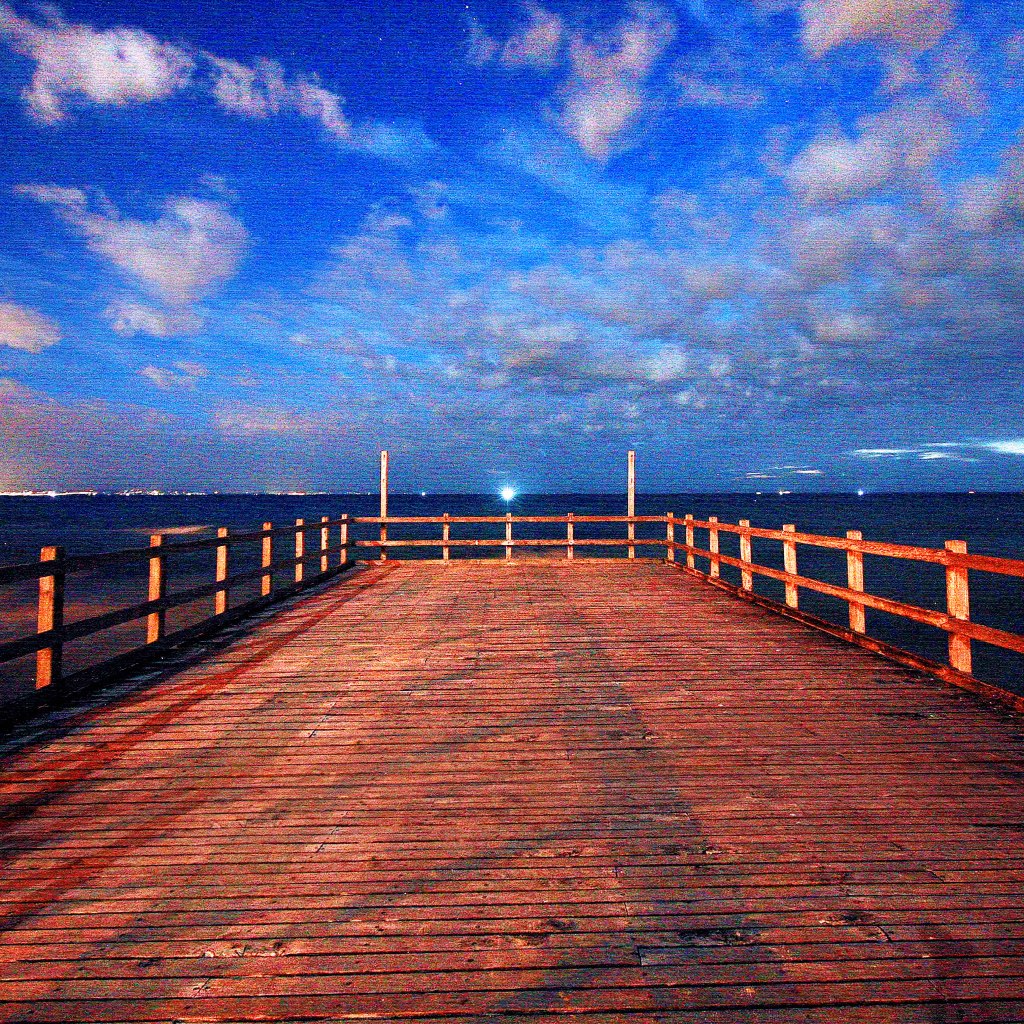
Sleeping Beauty

I met you on a cold and loveless night,
The moon had somehow withered, and the sea had taken fright,
Crashing upon the pier. And there, lying amid the platted coral,
Was you, a slumbering beauty partially hid,

But not so well as to escape my view.
So I tapped my sword upon your casket,
And I kissed your pickled lips, and I touched
Your fetta skin, and I held your salted hips.

But nothing could arouse you, could raise your heavy breast.
‘Oh, darling, oh what life we had, there’s time for that, for rest.’
And that, it seems, aroused response, in trebles, palsied, seer;
One horrible, horrible cry: ‘Oh lover, come not near!’

I screamed, I fell, your demon yell awoke in me desire.
I feinted, parried, rushed in and tarried,
Fell back, enduring, made a thrust,
And watched in horror, watched in fear, watched the rising gust;

And even so, and even then, there came that horrible cry again:
‘Oh lover, come not near!’ And such is how I found you,
On a cold and loveless night, the moon had somehow withered,
And the sea had taken fright, crashing upon the pier.
I went through a huge Robert Browning phase. One of my favourite poems of his is “Toccata of Galuppi”. There are few poets who are able to use language so elastically. Sometimes, I don’t even think some of his lines make sense – grammatically or otherwise! But who cares!
The Awful Brevity of Life & Levity of Death

Can I tell you of a time, a time when death’s unknown?
And that’s the only ever time, the time when we’re not grown.
And of the question, quite a question, a question I once asked?

Do you love me? Yes? And do you love me still?
Will the world grow ever colder till, anon, we feel the chill?
Over hill and under dale, watch that woman–in the vale!

Need love wear such a face? Mine’s uncovered–what disgrace!
Have you none of you decorum, commonsense, propri-et-y?
Wearing Molten masks of Mayfield’s False Face Soc-iet-y.

Yet one among you painted plums, the straw-fire flared and funked,
Wears quite another countenance, absurdly coiffed and punked–
Could it be my argument’s already been debunked?

‘Pray, madam, why so weary, why the pallor grey and blue?
‘What can a dame be thinking?’ And she answered,‘Same to you.
‘My boy you’re not so handsome as to even get a clue.’

‘Come now, grandma,’ I retorted, and she got it off her chest:
‘What can a dame be thinking? Boy, I’m thinking–take a breath–
‘Of the awful brevity of life and levity of death.’

‘ “Of the awful brevity of life and levity of”–God,
‘It really is a mouthful, hammered, fired and loosely shod.
‘Grandma, someone ought to tell you, take up bowling not the rod.’

So we singly sat and dallied, paused and pondered, thought awhile,
While meantime how the women each forgot to curtsy, smile,
Seeing somehow of indelicacy I had the air defiled.

I have no time for women (plural), there was but ever one,
A Prior’s niece who, being simple, I thought as simply won.
Naivety in youth’s a curse–how I thought the deal was done!

Since then I can’t even look upon–so sweet and chaste
Her face–another woman, no matter how, how decked in grace
The waist–for I could never more revisit that hamstrung, self-same place.

Supposing, then, the best thing God invented,
Beauty, and that other part, emotion regimented,
Could fall asleep and not deplete among impedimenta.

Hope, fear, sorrow, joy? Who is it, out of you, can’t say they’ve been so stern
As to never trip on fact, strive and fail, fail to act, fail to see and learn?
How I never knew the heart could ache, could ache and break, then yearn.

Zooks, have I fallen asleep among the bowl of fruits, my plummy face absurd?
Human-hating is hate of self–she swore her death, I gave my bauble-word.
But as I walk, of our two voices, it’s her voice that is heard.

‘My boy, you’re not a boy no more, so save your shallow breath.
‘Since as you stumble hence, my drear, I know your mind will quest
‘With the awful brevity of life and levity of death.’

With the awful brevity of life and levity of death,
[Ominously] The awful brevity of life and levity of death,
[Whispered] The – awful – brev-it-y – of – life – and – lev-it-y – of – death.
This poem is definitely inspired by Edgar Allen Poe, especially “The Raven.” I like how a supernatural scenario can actually be a stand-in for a very real situation.
By A Vampire Kissed

I was borne with a deep and an unnatural lust,
But nothing could prepare me for the days of hunger,
When necks were as morsels, replete for a bite;
You live in decay but we are already dust.

The hunger began when the sun was a plug-hole,
And the sky a great bathtub of blood;
And when night came on, as night it must,
It came on with a glug—

All drunk down, consumed, a spirit tasted too soon,
The Riesling of day had seeped away, and Shiraz had marked our ruin.
If only from the day, we dreamed, the night would steal away,
Or, if only from the night, the sun would strut less bright.

But neither was to be for us, for us the cloak and rod,
Toccatas by the billabong, and gallants by the flood.
Yet the zombies walking two by two, the zombies living day by day,
Clandestinely courted Father, and stopped him in his way;

And, laughing, told him that his flock was by a vampire kissed,
But the priest? He couldn’t hear of this; t’was more than he could bear,
And in the twilit chamber I heard the man declare,
‘I’m sorry, no, it isn’t so, the undead don’t exist.’

But he caught me in a coffin, my lips upon the neck
Of a golden-veiled and slumberous youth, with form bejewelled and decked
In sapphire strings, and finest tulle, a corpse laid out for dead.
His was a white and lily neck, and mine a scarlet red.

‘Oh God,’ I cried, with upturned face, my speech less mad than wild,
‘What thrills you in its worship, Father, kills me over time.
‘It leaches out the love I bear, then slowly petrifies,
‘Till hard, rock-hard, my heart and soul, my heart and soul and mind.’

And what, with the weeping walls around us, the cavernous roof and air,
Smelling of a mildewed life, and rust and want and care,
Did the priest—pernicious joke!—think to say to this?
‘My God, it’s so! No, never, no! The undead do exist!’

And I said again, I pleaded then, my heart alive and rapping,
‘Oh priest it’s day, please go away, don’t interrupt my napping.’
And once once more—oh why, the bore?—he said (this was the gist),
‘I’m sorry, no, it isn’t so, such things just don’t exist.’

I told him this, I told him that, I told him once or more,
A flighty thing had come by wing and cut me to the floor,
And kissed me wild and kissed me hard, and kissed me nightly whist;
The priest declared, in sunlight fair, ‘My son, you must resist.’

   Oh, I would if I were able,
Through blackened fingers break,
But affeared am I that you, through I,
   Will drive a blackened stake.

So I struck (with less grace than luck) the stake and mallet from him,
And he fled from thence (with unusual sense) ’fore my brethren were upon him,
And I fell with a panic and will into despair,
Of what was ill, what was just and what was reckoned fair.

But since that day, I’ve come to enjoy
The strength of my passions, the depth of my joy,
And the hunt that attracts me eternal.

For as the planets circle around themselves,
There rises the moon, diurnal.
And I sing me a ditty as pleasant as sweet,
And indisputably infernal:

With climbing stars and falling sun, into the night I nightly  run.
    Oh, if only from the day, the night could steal away.
Or, if only from the night the sun could strut less bright,
    But what would be the fun!
I can’t remember now what sparked this tongue-in-cheek protest poem. It may have been Ernest Jones’ “The Song of the Low”, written and published 1852.
Ode To Lucifer

She recognizes him by his smell,
Which is something more or less
Akin to the burning sulphur pits
And lava lakes of hell.

O Satan my redeemer.

I used to believe in a God Almighty,
   In his infinite wisdom and good
(One might call me a dreamer)
   Although in practice He
   Was both sullen and flighty
So I found me a deity who came through with the goods,
   And descants upon sin nightly:
O Satan, my redeemer.

I saw how the rich got rich on the poor,
   Who got poor and even poorer,
So I trashed me my old calm demean,
   Getting sore and even sorer;
   And, deciding me never to turn my cheek,
(My soul became nimble as a lemur)
   Thus began my winning streak,
   As I found me a strength from week to week,
   By starting to take, rather than to seek,
O Satan, my redeemer.

I used to believe in trickle-down economics,
That if you worked hard enough you could buy a good life,
   But the harder I worked the more I owed,
   The more my back bore, the further it bowed,
So of that opinion I became disabused
   And turned The Usurer,
   Not The Used!
Hail Satan, my redeemer.

Steal from the poor and give to the rich!
   Beggar the princess, and free the witch!
Muddy my scruples till I scarce know which
   Is good and which is evil!
Dear Satan, my redeemer.

And what of the zealots who ask me to recall
The sacrifice of one in the service of all;
The search of forgiveness, not of a fall?
This is what I say, I say to y’all:

Just as the toad is beautiful next to the weevil,
Good exists only in comparison to evil,
So when everyone’s as bad as bad can be,
(As bad a society and Satan and me);
When everyone’s a rotter, that is when
There’ll be no evil then.

Dear Satan, you wash me cleaner and cleaner!
This was a story told to me by my mother, that was shared among the girls in the dormitory at her boarding school. So I have no idea of its origin. I was reading traditional English ballads at the time, many of anonymous authorship, such as “Bonny Barbara Allen”, “The Unquiet Grave” and “The Twa Corbies.”
The Watermark

She’s dead, John, she’s dead, John, and never more will be.
She’s gone, John, she’s nought, John, that must be plain to see.
But how, John, yes now, John, it’s time you ought to know.
So listen, John, and ramble on, but don’t you think to go.

Now she was always a quiet and lonely lass,
   Yet she took with a terrible crowd,
Whose leaders were schoolgirls, not more than fifteen,
   But who had all their classmates cowed.

And in their rooms that smelt of pressed flowers,
   Of jasmine, and filigree, and Donne,
One night they stayed up when Sister was soused,
   Telling stories for hours and hours.

They whispered of Wights, and of Witches, and Ghouls,
   While around them the manor house slept,
And the bright chintz, and the firelight,
   Were all of the company they kept.

They picked upon your sweetheart, John,
   In her lace-trimmed dressing gown,
And Mabel smiled, but it was not of the mood
   Of smiles you had courted and won.

They dared her to enter the Newbury Cemetery,
   And hunt out the tomb of young Tom;
And they wrapped her shoulders in a fleecy Madeira
   Shawl for the prowling to come.

‘We dare you, we dare you,’ they chorused together,
   And not one noted the look in her eye.
It was a look that betrayed she was frightened,
   And held an unanswerable fear she might die.

‘Go to the grave where he’s lain these past weeks,’
   The leader of the girls huskily ordered.
‘It’s in the shadow of the church, away from the rest,
   ‘Under lichen, and by ivy bordered.

‘And once you’re there, on his dirt-cheap mound,
   ‘Lift up a pitchfork and plunge it in.’
And they poured her a parting vermouth in a cup,
   Which her hands eventually found.

So she climbed out the window and down the pipe,
   That had so often led to you, John,
But now it descended, like a fire pole,
   To arms more tight than strong.

For it was the night which held her now,
   As tightly as she held the fork.
And all her liaisons with Tom,
   Were busily at work –

Busily remaking themselves,
   In her cold and clamoured mind;
In the wind and in the workings
   Of a ghost, unwept, unkind: –

Young Tom, who had come in the morning,
   While the morning dewdrops gemmed
The pale blade of the verdant green
   And her gown, so neatly hemmed.

Young Tom, who had handed the letter
   So delicately watermarked
With a multi-foliate rose,
   Bled from a passionate heart.

Oh how, thought Mabel, he had flung that heart!
   And how, as assuredly, she would fling it back;
And how, with his death, she had wished to start
   All over – and wring it back.

Yet here she was on an errant dare,
   With the trees in rows like soldiers;
And their branches, stripped and bare,
   Reached out to pinch her shoulders.

Through a dark and winding shrubbery,
   Past villas new and old,
To an iron-gate at the cemetery,
   She stumbled in the cold;

And saw stunted cypresses and aucubus,
   And walls of impenetrable black,
While the pasty white of tombstones
   Crawled like leeches in her sight.

And she found young Tom, and she crossed her breast,
   And with calf-like movements, she raised the fork,
But in plunging it down it caught up her dress,
   And she cried in a manner berserk.

For she mistook the pull for a hand,
   As she had mistaken the lad for a fool,
And the touch of the wind was nothing
   If not indelicate and cool.

Thus, fainting upon the earth, her breath condensed to a cloud,
   The mist about her face was both mantilla and a shroud;
And the cold, the frigid air, quietly caught up her heart,
   And slowly stopped it from beating, and as slowly tore it apart.

And now two gravestones lie,
   Ill-defined, disordered.
They’re in the shadow of the church, away from the rest,
   Under lichen, and by ivy bordered.

She’s dead, John, she’s nought, John, that much you must forgive.
Yes, she’s gone, John, she’s gone on, and never will you give,
And never more receive, and never will you lie
With her, John, no never, John, she’s forever gone.
I wrote this after reading about the English legend of Lambton’s Worm. Lambton was a knight who fought with a worm (serpent). But each time he cut it up, its pieces would reattach themselves. Eventually he hit upon the solution of fighting it in a river, where its severed parts were carried away in the current, never to rejoin.
Like Lambton’s Worm

Beneath a greying, somnolent sky,
Where clouds are puffed and porous pillows,
   There lie
A field of lonely trees, with drowsy leaves that droop, a-weary,
Shot from twigs like trills atune to some clairvoyant air,
   Told upon the wind.
And where I hide, in a starless
Stygian starkness, does the world
   Decry
My ambling dog-trot, jog-trot, slow-coach, foot-pace, acrawl
For nothing could quicken me, or hope to once ensnare
   My moonless mind.

No, not mad, not me, no soul entombed, preservéd dead.
   No fear, you see I sit beside
   A stream of thoughts, unbidden, wide,
      Inside my head;
   Beside a stream beholding thoughts
      Unread.

No, fine, I’m feeling fine. Please, understand it’s me.
   My hand entraps a drowning thought –
   Ah, such thoughts, such feelings wrought
      From liquid reverie;
   Hearkening to a world of lock
      And lea.

See how my hand ensnares a thought?
   Marring the progress of others?
And how another thought is caught!
   What was the old it smothers?

What thought? That slithers from the bow!
Oh God, I see it now!
It’s the thought that takes the form
Of a fat and blooded worm,

Which scratches, latches
Onto my body, burnt by matches.
I feel it kill me, will me
With energy dead.
Its breath of onion
Smarts my head.

In shape, what does this thing confirm?
Articulated like a worm,
But with scales, spikes, and painted fangs,
It feeds on guilt and mortal pangs.

Yet can I flee or quietly stray?
For no, the mind’s aware,
   By the hunger, by the wear,
God, the mind, unruly, knows,
   By the iron, as it glows,
   With the torture, with the flare,
That the worm’s about to close.

Yet can I turn or run away?
No, the mind, it fully feels,
   By the slicing, by the weals,
God, the mind appreciates,
   By the serpent, how it hates,
   That cut up, the skin but seals,
To a stronger form and fate.

Yes, the worm has come
And the worm is great.

But that it would come, I guess I knew.
Whilst skirted in my thoughts, it grew.
And though I’ve sliced it through and through,
The many bits have fused anew.
It grows! Dear God this worm will me undo.
This poem was inspired by early Australian bush ballads. I was particularly enamoured with Henry Lawson’s poems, especially his “Faces in the Street”. It also owes something to Lawson’s dark, humorous vein, displayed in such stories as “The Loaded Dog.”
O Mary, My Dear

   Way beyond Yackandandah,
Past Drowned Gilligan’s Gulch,
   Out by Dill and Dander’s,
Near the Pearson’s Pouch,

In the country hospital
   Of the township of Toolay,
Everyone knows of the courtship of Nurse Mary,
   And Doctor William May.

   They’d had a boy brought in —
   In life, heavy, hale —
But his car had been wrapped
Round a tree and now napped
   He, deader than a nail.

‘O doctor,’ said Mary, ‘just what shall we do?
‘His parents, Catholics, bring a priest with them too!’
‘He was a boy,’ agreed Doctor, ‘fond of a session
‘Of evil — his folks would pine for confession.’

‘O doctor,’ said Mary, ‘pretend that his voice,
‘Is so weak that only we two (— t’was his choice —)
‘Can hear with ear trumpet his words and relay
‘His terrible sins of more than today.’

‘O Mary,’ cried he, ‘it will certainly take
‘An imaginative mind to debauchery fake.’
‘I don’t doubt,’ said Mary, ‘you’ve a will to invent
‘The kind of a thing you’d like to repent.’

The doctor purveyed her with a grin and a wink.
She blushed before scolding him — she needed to think:

‘I’ll tie to his legs a white cloth so the blood,
‘Thus stoppered, won’t gush in a terrible flood.’
‘O Mary, nurse Mary, you’ve a quick-written brain.
‘This zombie-turned man will yet talk once again.’

‘But Doctor, oh doctor, he’s cold, oh so cold.
‘Who’d credit that life in his body could hold?’
‘True, Mary—his face — the rigor mortis, it warps.
‘I’ll feed electricity into his corpse.’

Mary regarded him. He was sexy and smart.
Together in purpose? Yes. But what of the heart?

‘O Mary,’ cried doctor, ‘I love you. Let’s marry!
‘This leftover flesh will be warmed. Never tarry.’
With that, Mary’s doubt was relieved in a second.
Theirs was a match made in faking a heaven.

   And so…
Neither ever could have guessed
How their romance would bloom
   In an operating room,
While under them a corpse ‘confessed’.

The boy’s parents left, heartbroken but sated,
While the priest, a disbeliever, paused and waited,
Wanting to join the two in a tipple,
But a spark of blue,
A flaming spark,
Ignited from the nipple
Of the kid and, hark,
Danced across the room.

For they'd failed to turn off the current,
And the boy exploded in flames.
The priest who’d never believed now believed;
All twelve apostles — he invoked their names.

From then on, he led a blameless life,
Keeping away from drink and the kids.
He’d never do no more evil, he cried;
No, not for quids.

While all recall, to this day,
   Way beyond Yackandandah,
Past Drowned Gilligan’s gulch,
   Out by Dill and Dander’s,
Near the Pearson’s Pouch,
   In the township of Toolay:

How good folks of a kid gone bad were sated,
A priest in his bad bad ways abated,
A nasty boy was burned, cremated;
While a doctor and nurse were conjoined, elated.
This poem originated from another tale my mother told me. Again, where she first heard it, she couldn’t say.
The Mine Shaft.

Having trespassed, I ran
Through eucalypt forests
Where, pursued by a man,
Slipping wraith-like between trees,
His tendentious movements
Forcing me amongst great shafts,
Gold-mined, bottomless holes,
Fenced off with poles,
I climbed down or, rather, slid
Then hid
Inside the shallowest.

Dust rivers ran deep
In the rivulets of my form,
Pervaded my eyes and forced
Fitful coughing whence I hid.
I was ghostly in
Gold-clogged phosphorous.

The man who pursued me
Delved deaf
In deeper wood,
His shots down mine shafts
Drowning out my sneezing
With their unaccountable blasts.

I had, in my haste,
Destroyed a web,
A delicate spider’s,
Which now hung, a torn veil.
The bride, where was she...?

Whence she came I knew not.
In flagellation, hot
White threads whipped,
Forming flagellum that dripped
A patterned, silky shroud.
Wandering light lingered
In the shaft, a debil debil
Illuminating
The spider’s progress.
Dank smells of dug life
Smouldered with a smelting of rain.

A webbed lid, she made,
Which snared me, a live harvest.

Time passed.

The man peered within the shaft,
Accompanied by others,
And said, ‘She may be there,
‘In dark,’ and then another’s
Voice: ‘The web’s unbroken.’

How I was glad
The first was quick to understand,
And keen to save
His lead for the rightful grave.

They left,
And it was only then
That I opened the white trapdoor
And fled, in full possession
Of the means and modes of men.
I’m pretty sure Emily Dickinson’s “Because I Could Not Stop for Death” sparked this poem. But perhaps also Dora Sigerson Shorter’s “The Wind on the Hills.”
The Hearse.

It’s dawn; your hearse begins to take
  The bends with just a hint of brake,
Whilst people wake from salted slumber,
  And dreams they cannot number.

Can you see it? Heark,
   A brown, almost a reddish, spark,
A match newly lit?
   Here, on Sydney Road,

And there, in the city outskirts,
   Going oh so fast?
What is in the rear view mirror
   Is done with, already past.

Observe the scenery drudge
   By: reduced to a comical blur.
There is not a single line or smudge
   That can ever last or recur.

But note, it edges, like a time-lapse
   Film – the day, I mean,
   In jump-cuts unsmooth, unclean,
And now it’s noon, or two perhaps,

And your hearse has travelled to where
   Verticals bring relief.
The loneliness, the emptiness,
   How time was spent and brief.

But getting on, getting on,
   We come to late afternoon
And so does it – your hearse, its sheen
   (Once glistening red) now dried maroon.

And in the mid-life sun the world assumes,
  In tints of brazen gold,
A likeness to a Pharaoh’s tomb,
  Unutterably old.

And still it hurtles forth!
   And others are overtaken.
Some by so close a margin
   They’re left distressed and shaken.

Now within – what quivers there?
  What shape? What creature writhes about?
Perhaps we cannot know,
  But we know what goes without,

  For passing by,
Projected on the glass,
  Are visages of things that were
And quickly come to pass.

But heedless to such,
   Your hearse goes on.
Oh ever on, anon, anon,
   Top gear, no need for clutch.

Yes, on and on whilst the scenery blurs
  Into one single shot:
An image of the sights recalled,
  And those remembered not.

Then, with night approaching soon,
  The traffic lights come on.
They indicate the road ahead,
  Behind, the road that’s gone.

When dark, these orange lights become,
  As viewed through squinted eyes,
The colour and effect of rum
  That beckons to the rise.

Once topping this, your ride goes down
  Into a darkened valley,
Where a bridge spans across a creek
  Fringed by the river malley.

And finally your lift comes to rest,
   Right at your trembling feet.
You put on a show – you hope your best –
   And smile, and take your seat.
 Toco Productions